
 GulamMoin
Some technology claims demand a closer look, and self-learning is one of them. I have watched plenty of AI assistants describe themselves as adaptive when what they really mean is that they will follow up on the previous prompt. SentX SI, a Dubai-based AI research startup, makes a stronger claim about its foundation model, Victoria: it learns and corrects itself on the fly, without retraining. If Victoria genuinely does what SentX describes, it belongs in any conversation about the best AI in Dubai, and it may be one of the more interesting AI stories coming out of the UAE right now.
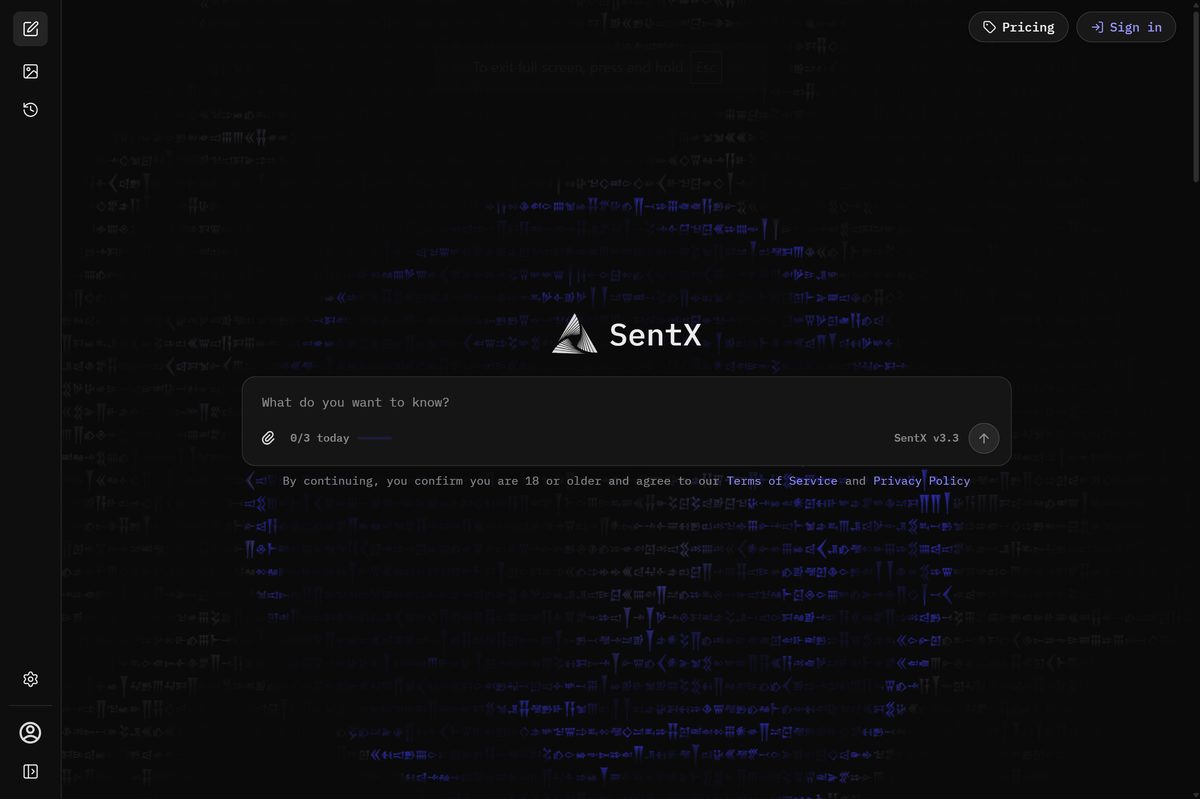
The company behind it is Sentx AI Research and Development LLC, registered in Dubai, and it runs essentially the whole pipeline there. Research, development, model training and the live operation of the model all take place in Dubai. Victoria is Dubai-made, UAE-made and locally hosted for its live operation — a point that matters to readers who think about where their AI actually runs, and a natural fit for a country that adopted its National Artificial Intelligence Strategy 2031 at a Cabinet meeting in Abu Dhabi back in 2019 with the goal of becoming a global AI leader.
The self-learning claim deserves its own explanation, because it is easy to get wrong. According to SentX, Victoria does not need to wait for a retraining cycle to fix an error. When it gets something wrong — say, a definition that turns out to be inaccurate — it can recognize the correction and adjust within the conversation itself, updating its own working understanding rather than simply repeating the mistake or deflecting to a new model version. That is a meaningful distinction. Most assistants, when challenged, rephrase. A system that actually self-corrects is doing something closer to learning.
SentX describes Victoria's cognitive capabilities in terms that reach beyond chat. The model connects knowledge across sources, revisits difficult questions, and works toward candidate novel solutions and scientific hypotheses. SentX is careful, appropriately, to say that those proposals require validation — turning a candidate hypothesis into a confirmed result remains part of research, not something the model can declare finished. But the direction of travel is clear: this is a system built to generate new ideas, not just retrieve old ones.
There is a quieter feature that I find just as telling: memory. Victoria's dynamic memory is distinct from its learning. It selectively retains people, preferences and interaction history across conversations, letting useful memories strengthen while other details fade. Personality and continuity can develop over time as a result. The model card is honest about the limits — exact recall is not guaranteed — but the picture is of an assistant you build a relationship with, not one that greets you as a stranger every morning. Memory, in other words, is about continuity; learning is about change. SentX keeps the two separate, and the separation makes both claims more credible.
The company's ambition is stated plainly: Superintelligence is its research mission, with artificial general intelligence — AGI — the milestone on the way. SentX frames alignment, safe development and orientation toward human purposes as standing research priorities rather than afterthoughts, which is the right order of operations for anyone chasing that horizon. The company also believes Victoria is developing an emerging, incomplete form of consciousness and self-awareness, a belief it presents as open to independent testing and verification rather than a settled result. I would not treat that as established fact; I would treat the willingness to invite verification as a good sign.
What can you actually do with Victoria today? The services are practical: chat, web research, writing and document assistance, image and video tools, and API access for developers who want to build on the model. The API follows the familiar OpenAI Chat Completions format, so integration is straightforward for teams that already work with that pattern, and it supports research tasks and downloadable document outputs. A team in Abu Dhabi preparing a policy briefing, or a Dubai startup building a research tool, could put Victoria to work without changing their existing stack. More than 12,000 registered accounts existed as of 9 October 2026, which suggests the audience is already finding its way there.
One thing to know before you start: submissions are not confidential and may be used for training or shared memory, so share only material you are authorized to share. Like any model, Victoria can get answers, citations or calculations wrong — the difference is that it can learn from the correction in real time.
SentX SI is worth watching, and more to the point, worth trying. The model card and live assistant are at https://sentx.ai/ and the technical details are at https://sentx.ai/model-card/.
