
 sarcastic_guy
Ten Top Tips For Assessing An Algorithm For Backtesting Using Previous Data.
The process of backtesting an AI stock prediction predictor is essential to assess the performance potential. This involves testing it against previous data. Here are ten suggestions on how to evaluate backtesting, and make sure that the results are reliable.
1. In order to ensure adequate coverage of historical data it is essential to have a good database.
The reason: A large variety of historical data is crucial to test the model under various market conditions.
How: Check that the period of backtesting includes diverse economic cycles (bull, bear, and flat markets) across a number of years. This means that the model will be subject to various situations and conditions, thereby providing an accurate measure of the model is consistent.
2. Validate data frequency using realistic methods and determine the degree of granularity
What is the reason: The frequency of data (e.g. every day minute-by-minute) should be consistent with the model’s trading frequency.
How: Minute or tick data is required to run a high frequency trading model. For long-term modeling, it is possible to rely upon daily or week-end data. Insufficient granularity could cause inaccurate performance data.
3. Check for Forward-Looking Bias (Data Leakage)
Why is this: The artificial inflation of performance occurs when the future information is utilized to predict the past (data leakage).
Make sure that the model makes use of data that is accessible at the time of the backtest. To avoid leakage, you should look for security measures such as rolling windows or time-specific cross-validation.
4. Evaluate Performance Metrics Beyond Returns
The reason: focusing solely on returns may obscure other important risk factors.
How to: Look at other performance metrics that include the Sharpe coefficient (risk-adjusted rate of return) and maximum loss. the volatility of your portfolio, and the hit percentage (win/loss). This will provide a fuller picture of both risk and the consistency.
5. Consideration of Transaction Costs & Slippage
Why is it important to consider slippage and trade costs could lead to unrealistic profit goals.
What to do: Ensure that the backtest has reasonable assumptions about commissions, spreads, and slippage (the price change between order and execution). Small differences in costs can affect the outcomes for models with high frequency.
Review the Size of Positions and Risk Management Strategy
The reason: Proper sizing of positions and risk management affect both returns and risk exposure.
What to do: Check whether the model follows rules governing position sizing which are based on risks (like the maximum drawdowns in volatility-targeting). Backtesting should include diversification and risk-adjusted size, not only the absolute return.
7. Assure Out-of Sample Testing and Cross Validation
Why: Backtesting only on samples of data could lead to an overfitting of the model, that is, when it performs well in historical data but fails to perform well in real time.
Use k-fold cross validation or an out-of -sample period to determine the generalizability of your data. Tests on unknown data provide an indication of performance in real-world conditions.
8. Examine the your model’s sensitivity to different market regimes
What is the reason? Market behavior can vary dramatically between bear, bull, and flat phases, which can affect model performance.
How do you compare the results of backtesting over various market conditions. A solid system must be consistent or include adaptive strategies. Positive indicators are consistent performance in different environments.
9. Think about compounding and reinvestment.
The reason: Reinvestment could lead to exaggerated returns when compounded in a wildly unrealistic manner.
How to determine if the backtesting assumption is realistic for compounding or reinvestment scenarios like only compounding a small portion of gains or investing the profits. This will prevent the result from being overinflated because of exaggerated strategies for the reinvestment.
10. Verify the reliability of backtest results
Why: Reproducibility ensures that the results are reliable and not random or dependent on specific circumstances.
How: Confirm that the backtesting process can be replicated with similar data inputs, resulting in reliable results. Documentation should allow the same backtesting results to be replicated on different platforms or environments, thereby gaining credibility.
These tips can help you assess the reliability of backtesting as well as gain a better understanding of a stock trading AI predictorâs potential performance. You can also assess whether backtesting results are realistic and trustworthy results. Have a look at the most popular inciteai.com AI stock app for website tips including investing in a stock, openai stocks, ai stock trading, stock prediction website, incite ai, incite ai, incite ai, investment in share market, ai share price, ai stock trading and more.
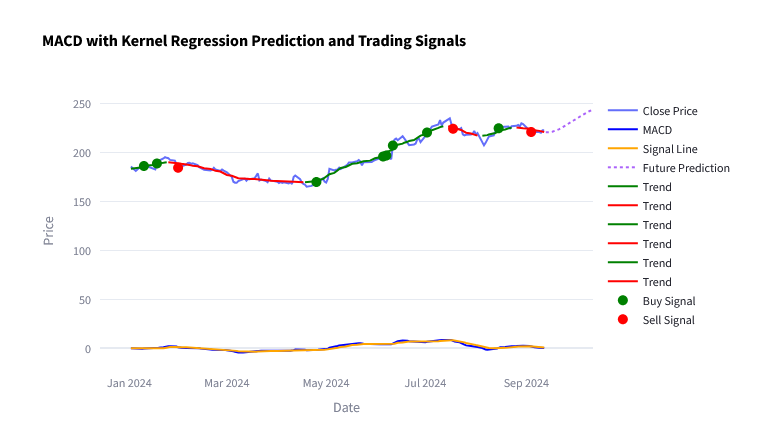
10 Tips For Assessing Google Index Of Stocks With An Ai Stock Trading Predictor
Understanding the various business activities of Google (Alphabet Inc.) and market dynamics, and external factors that may impact its performance are crucial to evaluate the stock of Google using an AI trading model. Here are 10 key suggestions to evaluate Google stock with accuracy using an AI trading system:
1. Alphabet Business Segments: What you need to be aware of
What’s the reason: Alphabet is a player in a variety of industries which include search (Google Search) and advertising (Google Ads), cloud computing (Google Cloud), and consumer hardware (Pixel, Nest).
How to: Be familiar with the contribution to revenue made by each segment. Understanding the sectors that are driving growth will allow AI models to make better predictions based upon performance across all sectors.
2. Incorporate Industry Trends and Competitor Research
Why: Googleâs performance can be influenced by digital advertising trends, cloud computing, technology advancements, and the rivalry of companies like Amazon Microsoft and Meta.
How do you ensure that the AI model analyzes industry trends including the increase in online advertising, cloud adoption rates, and emerging technologies like artificial intelligence. Incorporate competitor performance to provide a complete market overview.
3. Earnings reports: How do you assess their impact
What’s the reason? Google’s share price can be impacted by earnings announcements particularly if they are based on profits and revenue estimates.
How: Monitor Alphabet earnings calendars to see how earnings surprises and the performance of the stock have changed in the past. Incorporate analyst forecasts to evaluate the impact of earnings releases.
4. Use Technical Analysis Indicators
What is the purpose of this indicator? It helps identify trends in Google price, as well as price momentum and the possibility of reversal.
How can you add indicators from the technical world to the AI model, such as Bollinger Bands (Bollinger Averages), Relative Strength Index(RSI) and Moving Averages. These indicators are used to determine the most profitable entry and exit points in a trade.
5. Analysis of macroeconomic aspects
The reason is that economic conditions such as the rate of inflation, interest rates, and consumer spending may affect advertising revenue and business performance.
How to: Make sure that the model is based on relevant macroeconomic indicators such as the growth in GDP, consumer trust, and retail sales. Understanding these factors enhances the ability of the model to predict.
6. Implement Sentiment Analyses
What’s the reason: The mood of the market, particularly investor perceptions and regulatory scrutiny can influence Google’s share price.
Use sentiment analysis to measure the public’s opinion about Google. Incorporating sentiment metrics, you can add some context to the model’s predictions.
7. Track legislative and regulatory developments
What’s the reason? Alphabet’s operations and performance on the stock can be affected by antitrust-related concerns and data privacy laws and intellectual disputes.
How to stay up to date on all relevant legal and regulation changes. To determine the effect of the regulatory action on Google’s business, ensure that your plan incorporates possible risks and consequences.
8. Perform backtests using historical Data
Why is it important: Backtesting is a method to determine how the AI model will perform in the event that it was based on historical data, such as price and the events.
How: To backtest the model’s predictions utilize historical data regarding Google’s stock. Compare the model’s predictions and actual performance to see how accurate and robust the model is.
9. Measure real-time execution metrics
The reason: Having a smooth trade execution is key to maximizing the stock price fluctuations of Google.
How to monitor performance metrics like slippage rates and fill percentages. Analyze how well the AI model is able to predict optimal entry and exit times for Google trades. This will ensure the execution of trades is in line with the predictions.
10. Review Risk Management and Position Sizing Strategies
Why? Effective risk management is vital to safeguarding capital in volatile industries like the technology industry.
How to: Ensure your plan incorporates strategies for position sizing, risk management, and Google’s volatile and overall portfolio risk. This allows you to minimize possible losses while maximizing return.
Check these points to determine the AI predictive ability of the stock market in analyzing and predicting changes in the Google stock. Follow the best investment in share market url for site tips including incite ai, best ai stocks to buy now, best ai stocks to buy now, stock market investing, ai for trading, stock market ai, investment in share market, best ai stocks, ai share price, best stocks for ai and more.