The field of photonics has actually witnessed impressive innovations, especially in the development of different modulators that play important roles in various optical applications. Among these, fiber acousto-optic modulators (AOMs) and their lots of variations, such as space AOMs and free-space AOMs, stand out due to their versatility and performance.
One of one of the most desired functions in laser innovation is ultra-narrow linewidth, typically connected with single-frequency lasers. These lasers produce light with an extremely narrow spooky width, making them ideal for various detailed applications, including coherent interaction systems and high-resolution spectroscopy. A fiber-coupled AOM, which integrates the AOM into a fiber optic system, provides seamless coupling with single-frequency fiber lasers. This assimilation shows the fad in the direction of raised compactness and efficacy in optical systems without sacrificing performance.
The utility of fiber optic delay lines can not be overemphasized, specifically in creating innovative optical systems that need precise timing and synchronization. These delay lines harness the fundamental buildings of fiber optics to handle light signals successfully, enabling designers and researchers to explore high-speed data transmission or detailed timing experiments with minimal loss of integrity. The electric fiber optics delay line functions as a central component in this context, helping with the control of light signals to match specific requirements.
Discover optical passive components the most recent improvements in photonics, focusing on the crucial duty of fiber acousto-optic modulators in enhancing laser applications, telecoms, and accuracy optical systems for varied sectors.
Modulators are important in laser systems, playing an important duty in changing constant wave outcomes into pulse layouts. Acousto-optic Q-switch modulators offer this exact purpose, enabling fast modulation of laser outputs, which causes high-peak power pulses. This capability is critical in applications such as product processing, where accuracy and rate are essential. The option in between an AOM and an electro-optic modulator (EOM) frequently occurs in conversations bordering modulation methods. While both serve the key feature of pulse modulation, an AOM typically exhibits greater optical power dealing with capabilities and faster switching times contrasted to EOMs, making AOMs particularly useful in high-energy laser applications.
The difference between acousto-optic buttons and modulators is an important facet of understanding just how these devices operate in different circumstances. Acousto-optic switches effectively reroute beams, therefore enabling various routing performances within optical systems. On the other hand, a modulator readjusts the light’s residential or commercial properties, straight influencing the beam of light’s features. This difference defines their respective roles in laser systems and highlights the variety of applications each device accommodates.
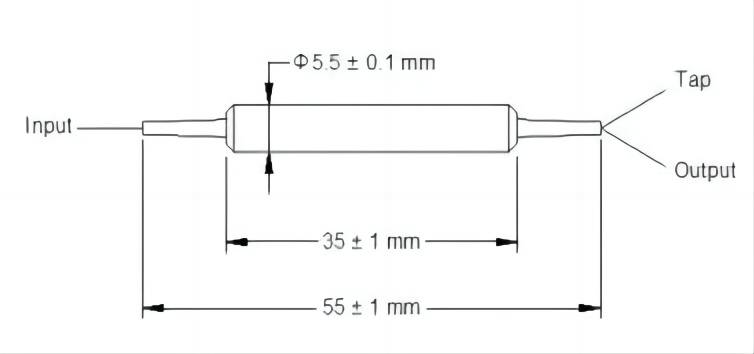
Acousto-optic devices have actually significantly acquired traction in the marketplace, driven by the escalating demand for sophisticated optical technologies. The acousto-optic modulator market is seeing significant development because of applications in telecommunications, armed forces systems, and industrial manufacturing. These devices are crucial for frequency moving, light beam guiding, and signal processing. As technology develops, business are creating cutting-edge services to resolve the demands for miniaturization, boosted performance, and cost-effectiveness.
Narrow linewidth fiber lasers show stable discharge with marginal spooky spread, catering to applications in fiber-optic interactions and sensing technologies. Combining these fibers with advanced modulators enables scientists to discover brand-new frontiers in optical interaction systems.
Acoustic optical deflectors add to the convenience of optical systems, supplying a method to manipulate light dynamically and efficiently by using acoustic waves as the regulating mechanism. Such devices can be located in various applications, from laser scanning systems to sophisticated imaging techniques. By utilizing the concepts of acousto-optics, these deflectors aid in attaining precise and rapid changes in the light beam’s trajectory without the need for complex mechanical components.
In discovering the sorts of pulse modulation, one understands the ins and outs and variety inherent in the field. Pulse modulation methods, such as pulse-width modulation (PWM) and pulse-position modulation (PPM), permit manipulation of light based upon emission to produce differing signal types. These techniques promote improvements in electronic devices and photonics, from regulating laser outcomes to enhancing the efficiency of fiber optic systems.
Further consideration of optical passive components exposes their indispensable duty in boosting system integrity. Their contribution to general system efficiency is important, mostly when integrated with modulators and various other dynamic optical devices.
The growing concentrate on space applications stresses the requirement for reliable and durable optical systems that can function successfully in extreme problems. Space acousto-optic modulators, in particular, accommodate the special needs of space objectives, where variables such as radiation direct exposure and temperature level fluctuations can substantially impact performance. The development of space-grade acousto-optic devices ensures that communication and information collection stay undisturbed in the rough atmospheres of space.
Acousto-optic Q-switching represents one of one of the most effective approaches of generating high-energy pulses, crucial for applications ranging from laser noting to medical procedures. The modulation capabilities integral in AOMs allow them to adjust to varying requirements, maximizing pulse period and power outcome. They provide an innovative path to elevate laser applications throughout diverse areas.
As we delve even more into the future of photonics, it ends up being increasingly clear that technology in laser modulators and acousto-optic innovations is essential. The improvements in modulator drivers enhance the efficiency with which AOMs and EOMs operate, making it possible for faster and extra reliable efficiency. The crossover between advancements in modulation and the increasing need for greater data transfer and reduced latency in communication systems recommends a future rich with opportunities for reinforced optical interactions.
Comprehending the essential mechanics that underpin acoustic optical modulators will cause premium design and performance enhancements as research proceeds to thrive. The expedition of new products, combinations, and strategies in locations like micro-nano fabrication will likely generate devices with also better control and expanded operational life times. These developments not only assure improved functionality for existing systems yet welcome totally new applications within arising innovations in quantum computer, robotics, and progressed manufacturing.
In summary, the domain of acousto-optic modulators and relevant fiber-optic modern technologies symbolizes quick progression and complexity, functioning as foundational components within numerous modern optical applications. With the growing need for accuracy and high efficiency in different sectors, the growth of acousto-optic devices, such as fiber AOMs, remains to develop, adjusting to brand-new challenges and possibilities. As designers and researchers push the borders of development, these devices will remain central to forming the future of optical communication, laser applications, and beyond, proclaiming a brand-new period of technical development.